Guides to solution chemistry
Sixteen original, carefully explained guides covering everything the calculators do — and the chemistry behind them.
Fundamentals
What Is Molarity? A Complete Guide to Molar Concentration
Molarity (mol/L) is the most widely used way to express the concentration of a solution. Learn t…
Read guide →
How to Calculate Molarity: A Step-by-Step Method
A reliable, repeatable method for calculating molarity from mass, moles, or volume, with worked …
Read guide →
Molarity vs Molality: The Difference Explained Clearly
Molarity and molality look alike but measure different things. Understand the distinction, when …
Read guide →
Dilution and Serial Dilution Explained (C1V1 = C2V2)
How to dilute a stock solution to a target concentration using C1V1 = C2V2, plus how serial dilu…
Read guide →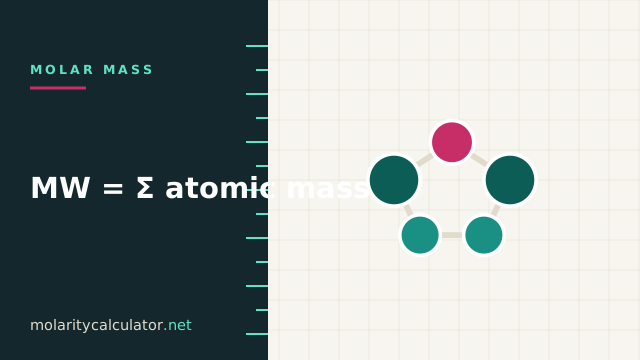
Molar Mass and Molecular Weight: How to Calculate Them
Molar mass is the bridge between grams and moles. Learn how to calculate it from a chemical form…
Read guide →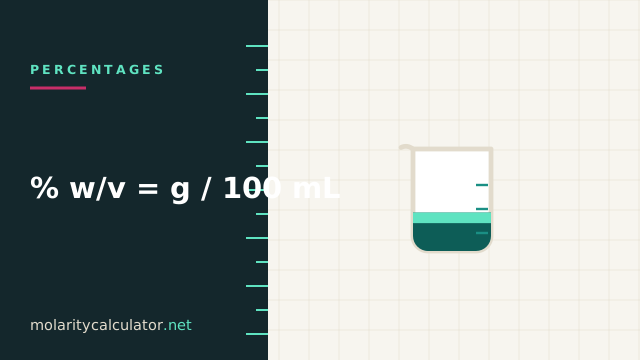
Percent Concentration Solutions: w/v, v/v and w/w Explained
Percentage concentrations are everywhere in labs and product labels. Learn the difference betwee…
Read guide →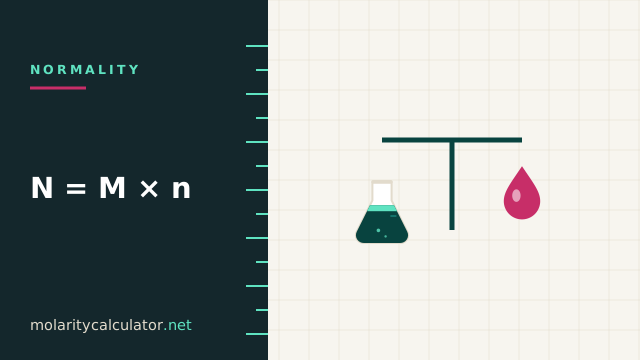
Normality vs Molarity: When and How to Use Each
Normality expresses concentration in reactive equivalents rather than moles. Learn how it relate…
Read guide →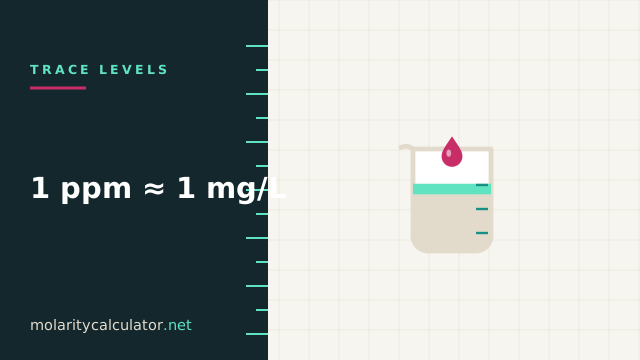
Parts Per Million (ppm) and Parts Per Billion (ppb) in Solutions
At trace concentrations, ppm and ppb replace molarity and percentages. Learn what they mean, how…
Read guide →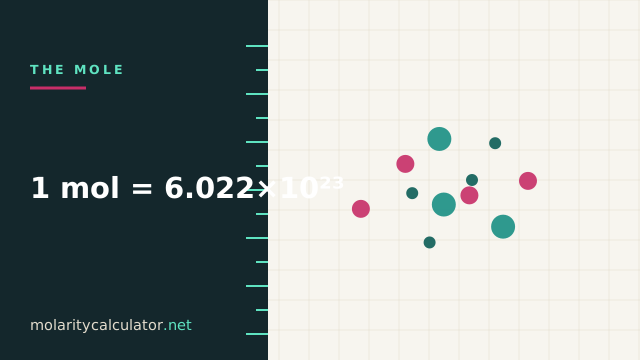
The Mole Concept Explained Simply
The mole is the chemist's counting unit and the foundation of molarity. Understand Avogadro's nu…
Read guide →Lab Technique
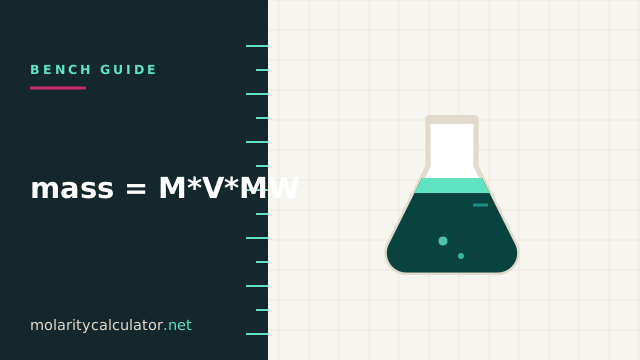
How to Prepare a Solution of a Specific Molarity
A practical bench protocol for making up a solution to an exact molarity, from calculating the m…
Read guide →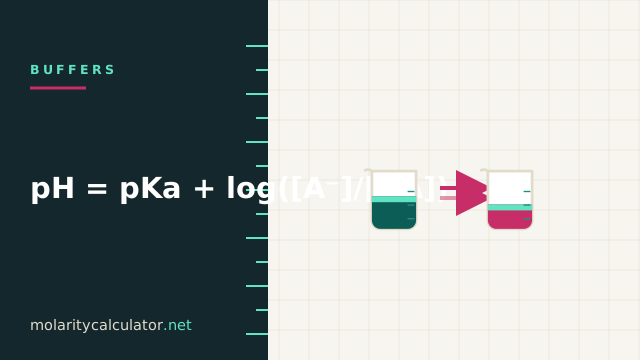
How to Make a Buffer Solution: A Bench Scientist's Guide
Buffers hold pH steady so experiments stay reproducible. Learn how buffers work, how to choose o…
Read guide →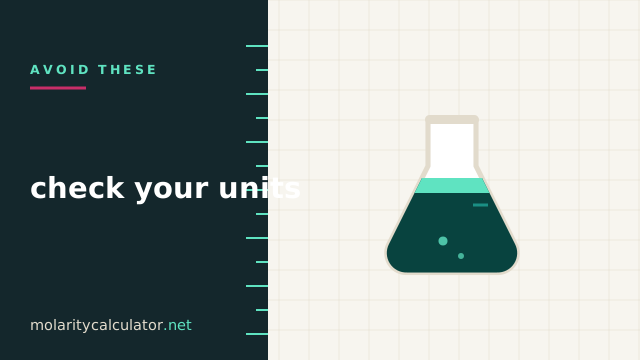
Common Solution Preparation Mistakes (and How to Avoid Them)
The handful of errors behind most wrong concentrations, from millilitre/litre slips to hydrate c…
Read guide →
How to Use a Volumetric Flask Correctly
The volumetric flask is the most accurate way to make a solution to a known volume. Learn to use…
Read guide →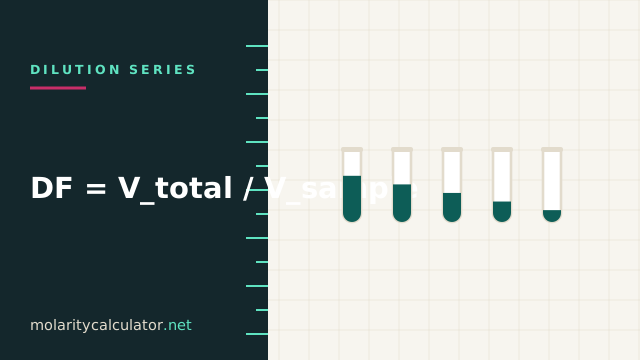
Serial Dilutions for Cell Culture and Microbiology
Serial dilutions make countable plates, standard curves, and dose ranges. A practical guide to t…
Read guide →Problem Solving
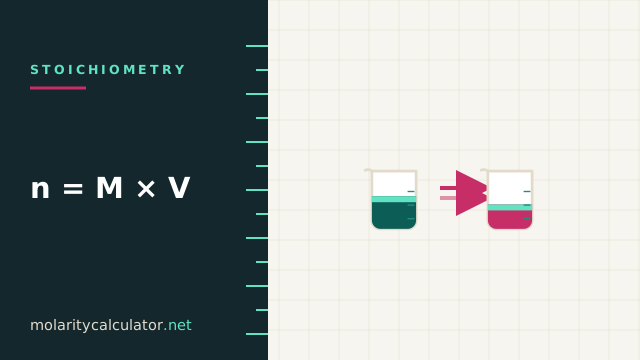
Stoichiometry and Molarity: Solving Solution Reaction Problems
When reactions happen in solution, molarity and stoichiometry work together. Learn the moles-bri…
Read guide →
pH, pOH and the Concentration of Acids and Bases
pH is a direct readout of hydrogen-ion molarity. Learn how pH, pOH, and concentration connect, a…
Read guide →