A volumetric flask is a piece of precision glassware calibrated to contain one exact volume at a single line on its neck. It is what turns a rough mixture into a solution of accurately known concentration, and using it well takes only a few correct habits.
Why a volumetric flask, not a beaker
Beakers and conical flasks are made for stirring and reacting; their printed graduations are approximate, often within only 5%. A volumetric flask is calibrated to a single mark with a tolerance measured in fractions of a percent. When the final volume must be exact — for any standard or known molarity — the volumetric flask is the right tool.
Step by step
- Dissolve first. Add the solute and roughly half the final volume of solvent; swirl until fully dissolved. Never weigh solute into a flask already filled to the mark.
- Approach the mark. Add solvent until you are a centimetre or so below the line.
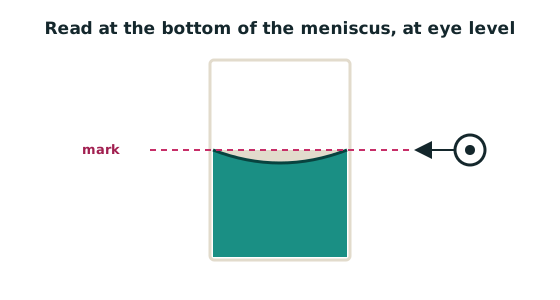
- Finish dropwise. Use a wash bottle or dropper to bring the bottom of the meniscus exactly onto the mark, viewed at eye level.
- Stopper and invert. Mix by inverting the stoppered flask many times; do not shake. Inversion mixing is thorough and avoids trapping air.
Reading the meniscus
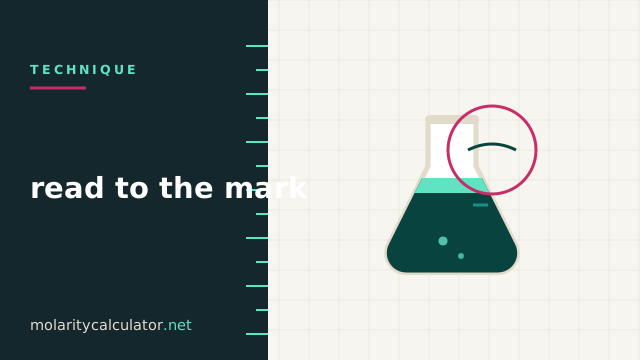
For water and most aqueous solutions the surface curves downward, forming a concave meniscus. Read the volume at the lowest point of that curve, with your eye level with the mark to avoid parallax. Good lighting and a dark card held behind the neck make the meniscus easier to see.
Hold a dark strip of paper just behind and below the calibration line. It throws the meniscus into sharp relief and makes the bottom of the curve obvious.
Temperature and tolerance
Volumetric glassware is calibrated at a stated temperature, usually 20 °C, printed on the flask along with its tolerance class. Because liquids expand with heat, fill and read at close to that temperature for best accuracy. Let hot solutions cool to room temperature before making up to the mark.
Care and cleaning
A clean flask drains without droplets clinging to the glass; beading indicates residue that will skew the volume. Rinse with the solvent you will use, avoid abrasive brushes that scratch the calibration neck, and never heat a volumetric flask on a hotplate or in an oven, which can permanently alter its calibrated volume.
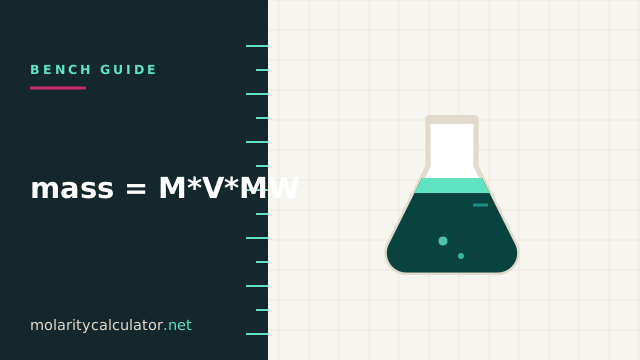
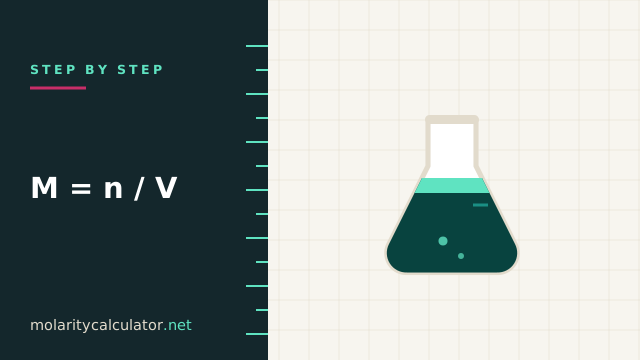
With the flask handled correctly, the calculation is the easy part — confirm your target mass and concentration with the molarity calculator and you are set.
Recommended lab gear
Some links below are affiliate links. As an Amazon Associate we earn from qualifying purchases, at no extra cost to you. See our affiliate disclosure.
Volumetric Flask Set (Class A)
Class A borosilicate flasks for making solutions to an exact volume.
View on Amazon